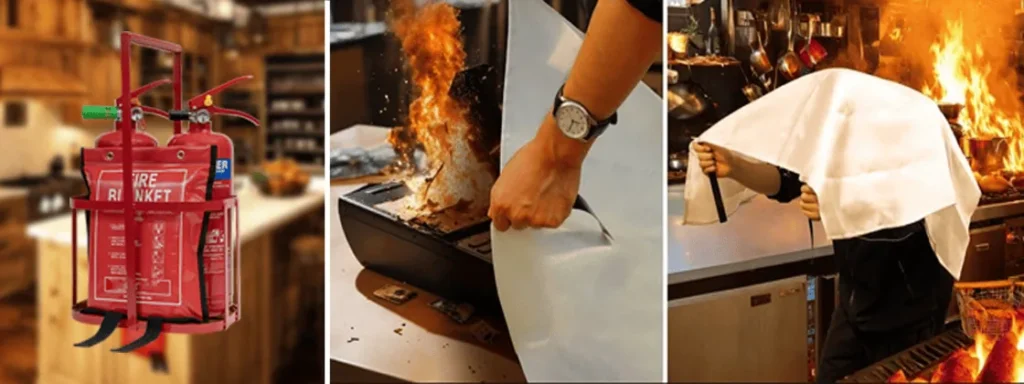
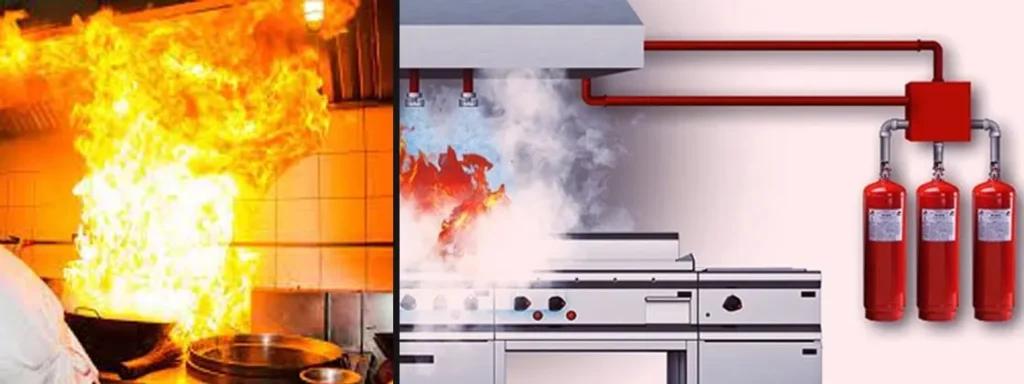
Commercial kitchens are busy places full of delicious aromas and sizzling pans. Unfortunately, fire risks are also a point of concern, which is why it’s important to have proper fire safety systems in place. The installation of a Kitchen Hood Fire Suppression System is one such requirement to stay compliant with the UAE Fire Code.
But, the question arises, what exactly is it and why is it so important? We’ll break things down step-by-step.
Kitchen Hood Suppression: What is it and its application
A Kitchen Hood Fire Suppression System is designed to protect commercial kitchen with three or more burners. These systems work to prevent fires from escalating and are usually installed directly above cooking stations. Hence, the process of fire containment is made far easier.
These systems are necessary for the protection of:
Cooking Hoods:
The part that captures smoke and grease.
Ducts:
Pathways for air and fumes to escape.
Plenums:
Space between the cooking hood and ductwork.
Grease Removal Devices:
Filters which trap grease from the air. Cooking Appliances: Stove, fryers, and grills (basically where all the cooking magic happens). Without a suppression system, grease buildup and high heat make for a recipe of disaster.
Key Components
The suppression system may sound technical but it’s essentially a group of parts working together to stop fires quickly.
Here’s what’s included:
Wet Chemical Containers:
They hold the fire-suppressing agent.
Detectors:
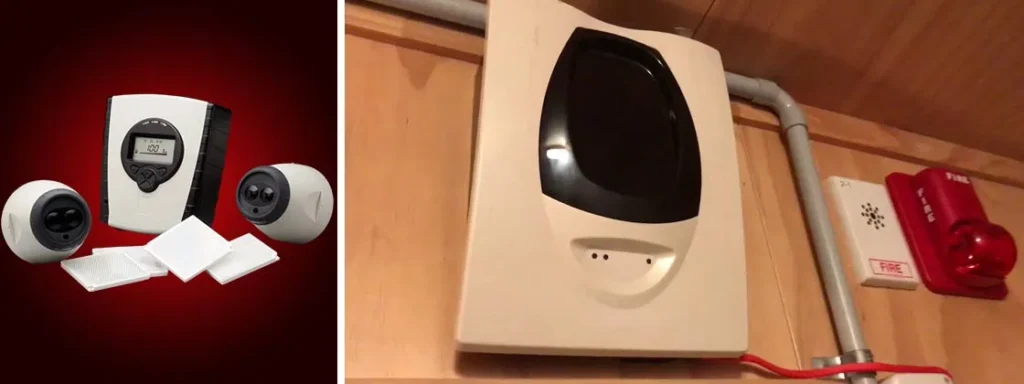
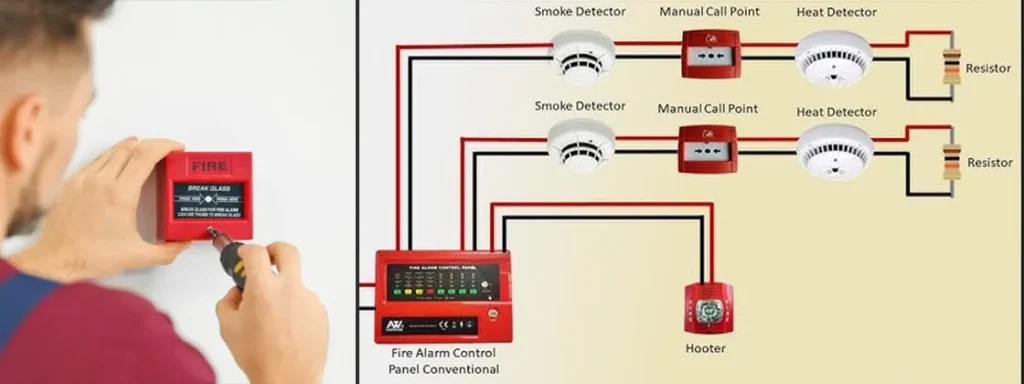
Sensors that detect high heat or flames.
Control Systems:
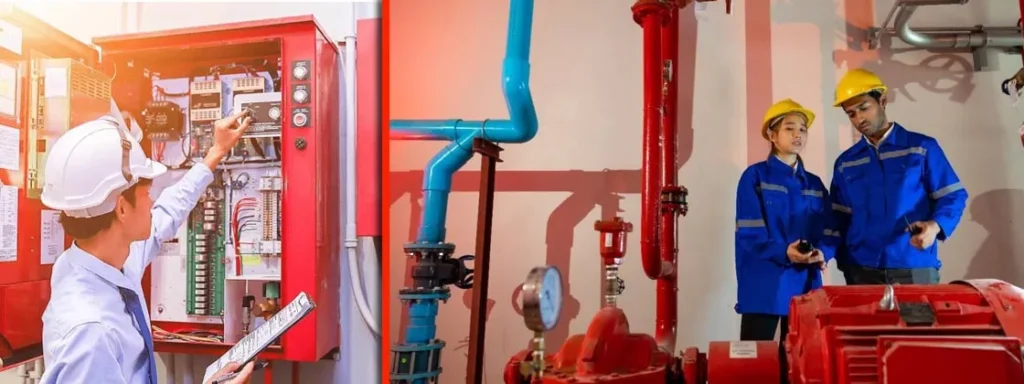
The brain of the operation that certifies smooth functioning.
Expellant Gas Cartridges:
Help distribute the wet chemical.
Piping & Discharge Nozzles:
Direct the suppressant to the fire.
Manual Actuators:
Lets people activate the system in case of an emergency. Each of the above components play a role in suppressing fires before they spread.
System Design & Installation
The design and Kitchen Suppression System Installation isn’t something you can do on a whim. The UAE Civil Defence has some regulations in place. Here are the highlights:
- The system must be pre-engineered and approved by the UAE Civil Defence standards.
- Discharge nozzles need to be corrosion-resistant and protected against grease and moisture buildup (so that they’ll work properly even in a busy kitchen).
Professional installation is a must to meet compliance and uphold the system’s effectiveness.
System Operation
How does the system actually work? The answer to that is – it’s designed to be both automatic and manual with the intention that it provides layers of safety.
Automatic Activation:
The system detects high temperature or flames and releases the wet chemical agent to extinguish the fire.
Manual Activation:
There’s a manual actuator for added control which can be pulled in case of an emergency. The manual actuator must be installed at a height between 1067mm and 1200mm from the floor.
The reason for this is easy accessibility, i.e. easy for the kitchen staff to reach during high-stress situations.
Power and Fuel Shutoff
When a fire occurs, the last thing you want is heat-producing equipment adding fuel to the flames. That’s the reason why the system includes automatic shutoff for all power and fuel sources connected to the cooking appliances. This step stops the fire and also prevents it from reigniting.
Why Compliance Matters
Fire Suppression System Installation that complies with the UAE Fire Code is a smart, responsible choice. Think of it as way more than just ticking a box for compliance, rather it’s about creating a safer environment for everyone. At the center of this requirement is the core purpose of MMJSS to empower and protect life and property through innovative solutions. By adhering to values like integrity, commitment, and excellence, businesses can ensure they are upholding the highest standards of safety.